 登录 / 注册
How to View Bitcoin Trading Phenomenon?
摘要:Bitcoin,sinceitsinceptionin2009,hastranscendeditsoriginsasanichedigitalassettobecome...

Bitcoin, since its inception in 2009, has transcended its origins as a niche digital asset to become a global phenomenon, with its trading activity capturing widespread attention. From soaring price rallies to sharp corrections, Bitcoin’s volatility and the growing number of participants—ranging from individual retail investors to institutional players—have sparked intense debate: How should we objectively view the Bitcoin trading phenomenon? To answer this, it is essential to analyze its underlying drivers, its dual nature as both a technological innovation and a financial instrument, and the risks and societal implications it carries.
Bitcoin Trading: A Convergence of Technology, Finance, and Human Psychology
At its core, Bitcoin trading is inseparable from the technological breakthrough it represents. As the first successful implementation of blockchain technology—a decentralized, transparent, and tamper-resistant ledger—Bitcoin introduced a new paradigm for digital value transfer. Unlike traditional currencies backed by central banks, Bitcoin’s supply is capped at 21 million coins, a feature that proponents argue makes it a “store of value” akin to digital gold, immune to inflationary policies driven by governments. This intrinsic value proposition, rooted in scarcity and decentralization, forms the foundation of its trading appeal.
However, Bitcoin trading is equally driven by financial speculation and human psychology. Its extreme price volatility—often swinging by 10% or more in a single day—attracts traders seeking high returns. For many, Bitcoin is not just an asset but a “narrative”: a symbol of financial rebellion against traditional systems, a hedge against economic uncertainty, or a ticket to generational wealth. This narrative, amplified by social media, celebrity endorsements, and media hype, fuels FOMO (Fear of Missing Out) and FUD (Fear, Uncertainty, and Doubt), creating self-reinforcing cycles of buying and selling that exacerbate price swings.
The Dual Nature: Innovation vs. Speculation
Bitcoin trading exists in a paradoxical space: it is simultaneously a driver of financial innovation and a hotbed of speculation. On the positive side, trading activity has accelerated the development of the broader cryptocurrency ecosystem. Exchanges, custodial services, and derivative products (like futures and options) have matured, providing liquidity and infrastructure that make digital assets more accessible. Institutional adoption—companies like Tesla and MicroStrategy adding Bitcoin to their balance sheets, and financial giants like Fidelity and BlackRock offering Bitcoin-related investment products—has lent it a degree of legitimacy, signaling its potential as a mainstream asset class.
Yet, the speculative fervor surrounding Bitcoin cannot be ignored. For many traders, short-term price movements outweigh fundamental value, leading to market manipulation, pump-and-dump schemes, and irrational exuberance. The lack of intrinsic cash flow (unlike stocks, which generate dividends) means Bitcoin’s value is almost entirely dependent on future demand, making it highly susceptible to sentiment shifts. This speculation has also raised concerns about its impact on financial stability: while Bitcoin’s market capitalization remains a fraction of global financial markets, its correlation with traditional assets during times of crisis (e.g., rising alongside stocks in 2020, then decoupling in 2022) suggests it could amplify volatility in portfolios.
Risks and Challenges: Volatility, Regulation, and Sustainability
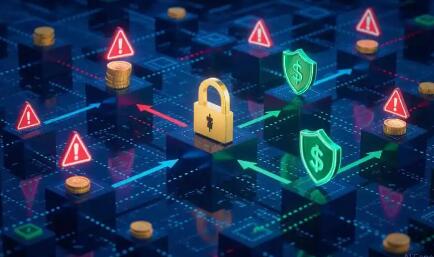
Viewing Bitcoin trading objectively requires acknowledging its significant risks. First, volatility is inherent: Bitcoin’s price has experienced multiple boom-and-bust cycles, with early adopters reaping life-changing gains while latecomers have suffered catastrophic losses. This makes it a high-risk asset, unsuitable for investors with low risk tolerance or short time horizons.
Second, regulatory uncertainty looms large. Governments worldwide are grappling with how to classify and regulate Bitcoin—whether as a currency, a commodity, or a security. Crackdowns on exchanges in countries like China and the U.S. Securities and Exchange Commission’s scrutiny of crypto firms have highlighted the legal risks associated with trading. Without clear, consistent regulation, investors remain vulnerable to fraud, and the market’s long-term viability is questioned.
Third, Bitcoin’s environmental impact cannot be overlooked. The “proof-of-work” consensus mechanism that secures the network requires massive computational power, consuming as much electricity as some small countries. While proponents argue that renewable energy adoption is mitigating this concern, the carbon footprint of Bitcoin mining remains a critical ethical and sustainability challenge that traders and investors must confront.
A Balanced Perspective: Beyond the Hype
So, how should we view Bitcoin trading? The answer lies in balance. Bitcoin is neither a panacea for all financial ills nor a speculative bubble destined to burst. Instead, it is a complex, evolving phenomenon that reflects the intersection of technological innovation, human behavior, and global economic trends.
For investors, the key is to approach it with caution and education: allocating only a small portion of a portfolio to Bitcoin, understanding its risks, and avoiding impulsive decisions driven by hype. For society, the focus should be on fostering responsible innovation—developing clear regulations to protect consumers, promoting sustainable mining practices, and harnessing blockchain technology for applications beyond speculation (such as cross-border payments or supply chain management).
Conclusion
Bitcoin trading is more than just a financial activity; it is a mirror of our times, revealing our hopes for financial freedom, our fears of economic instability, and our capacity for innovation and excess. While its volatility and risks are undeniable, dismissing it outright ignores its potential to reshape the future of money. By viewing Bitcoin trading through a critical yet open lens—one that acknowledges both its promise and its pitfalls—we can better navigate this new frontier and make informed decisions in an increasingly digital world.